
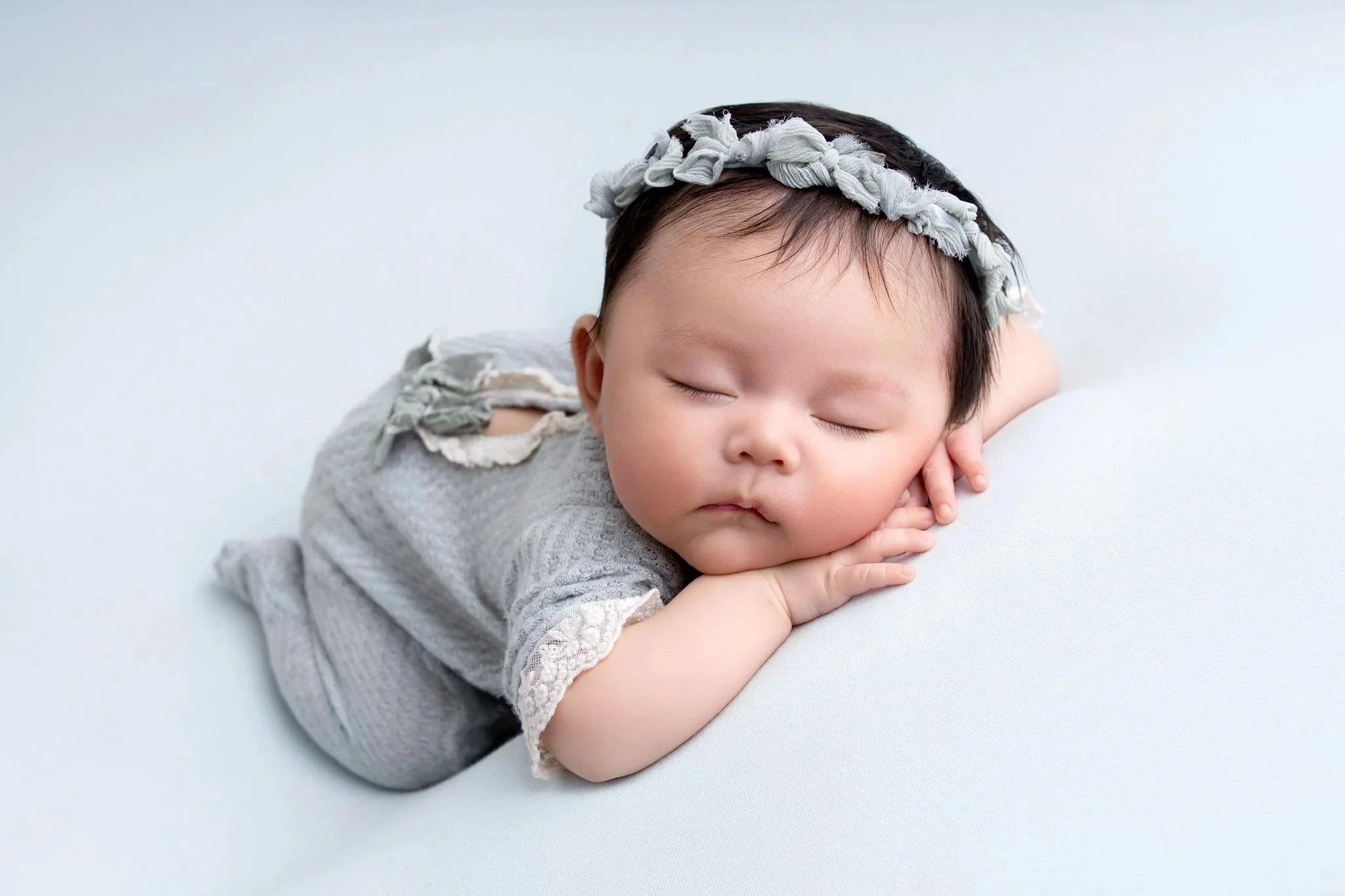
HOW A NEWBORN PHOTOSHOOT REALLY WORKS BY AN EXPERIENCED NEWBORN PHOTOGRAPHER
If you have been looking at newborn photography online, it is easy to assume the process is simple.
A sleepy baby.
A few soft blankets.
A handful of carefully posed images.
How hard can that be…?
What you don’t see is that the photography itself is only a small part of what is happening.
A newborn session is less about taking pictures and more about understanding babies, their physiology, their temperament, their limits, their cues. It is a balance between preparation, timing, environment, experience and adaptability. The camera comes in after all of that is in place. Here I explain what is actually involved. Because when you understand the process, everything makes more sense and expectations feel grounded rather than uncertain.
What the process actually involes
To understand why photography is only a small part of the session, here’s typically what happens behind the sense:
Studio temperature is carefully controlled for baby’s comfort
Fabrics and props are prepared in advance
Lighting is adjusted when baby is positioned
My hands remain close to baby at all times
Movements are slow and deliberate
Feeding breaks are expected and are built in to the session
Parents are guided in posing, and not left guessing
Adjustments are made constantly based on subtle cues from the baby
A single pose may involve:
Wrapping adjustments
Gentle rocking
Repositioning fingers
Smoothing fabrics
Waiting for relaxed breathing
Capturing multiple frames to ensure safety and softness
Why Every Baby Is Different
Every newborn is different. Two babies on the same day, at the same weight, to similar families can behave complete differently during a session.
Some babies:
Sleep deeply and settle quickly
Love being wrapped snugly
Tolerate gentle repositioning
Others:
Startle easily
Prefer their arms free
Resist certain positions
Wake frequently for feeding
Need constant physical contact to relax
There is no “standard newborn”.
Age matters. Birth experience matters. Feeding style matters. Reflux, wind, muscle tone, sensitivity to temperature all play a role. For example:
A 6 day old baby who feeds well and sleeps deeply may allow a gradual flow of wrapped poses into unwrapped images.
A 12 day old baby who is cluster feeding and unsettled may spend most of the session being soothed and wrapped, and that is completely normal.
A 7 week old baby is neurologically different - more alert, more awake, more resistant to being curled into womb like positions. Again, completely normal.
This is why every session unfolds differently. It is not inconsistency, it’s responsiveness.
Why Not All poses are suitable for eveRy baby
You may see a particular pose on my website and think, “I love that one, can we do it?”
Sometimes, yes. Sometimes, no.
And that is not about willingness on my part to do it, it’s about suitability.
Certain poses require:
A deeply sleeping baby
Relaxed muscle tone
A baby comfortable being unwrapped
A baby who tolerates gentle repositioning
For example, a pose where baby’s chin rests gently on their hands looks peaceful and effortless. But in reality, it may require careful hand support, compositing and a baby who is completely relaxed. If a baby show discomfort, I wont force it. Another example is unwrapped tummy poses. Some babies love them. others stiffen, cry, or show clear stress cues. If that happens I move on.
The goal is never to ‘get the shot’. The goal is to read the baby and respond appropriately. Sometimes that means adapting. Sometimes that means changing the direction entirely. That isn’t failure, it’s professional judgement to keep the baby safe and happy at all times.
why being flexible to your newbon session is essential
This is because a lot of the time is taken up by other things other than photographing your baby. If a baby needs feeding, we pause. If a baby needs to be held and soothed, I allow it. If a baby startles and wakes, I reset.
A session may include:
Multiple feeding breaks
Nappy changes
Time spent settling
Adjustments to wrapping or temperature
Gradual transitions between setups
The actual time spent pressing the shutter button on the camera is small compared to the time spent preparing, soothing, adjusting and waiting. For example, a baby may settle beautifully in a wrap. I will capture several images. When gently transitioning to an unwrapped pose, the baby wakes and becomes unsettled.
At that moment, I have to make a decision:
Do I attempt to resettle?
Do I return to a wrap?
Do I move to parent images?
Do I change the flow entirely?
That flexibility protects baby’s comfort and the overall session. Rigid expectations does not work with newborns. Responsive planning does.
why silbling cooperation isn’t guaranteed
Sibling images are often some of the most meaningful photographs, but they are also the least predictable. A two year old does not always operate on expectations.
They may:
Be excited
Be shy
Be jealous
Be tired
Refuse to sit
Cling to a parent
That doesn’t mean something has gone wrong. It means that they are a normal two year old. Because of this, sibling images are usually captured early in the session, when attention spans are the strongest. Sometimes I can capture a calm, beautiful portrait in minutes. Other times, I work gently, playfully and patient to get even one frame where everyone is safe and comfortable. And occasionally, a sibling may simply not cooperate - and that’s ok. This session isn’t looking for perfection. It’s to capture reality.
A toddler may decide that they do not want to hold the baby. I will never force physical contact. Safety and comfort will always come first.
why safety and comfort override aesthetics
Newborn safety is not a marketing phrase. It’s a practical responsibility. Some poses seen online are composite images, created by blending 2 or 3 photographs in post editing to ensure a baby is supported at all times. Some babies will not like being posed a certain way. If a baby shows signs of discomfort then I will adjust the pose or move on to another. Comfortable babies look peaceful. Uncomfortable babies look tense. The difference is visible, even if subtle. A truly beautiful newborn image is one where the baby is relaxed, supported and content.
the baby might not settle
Some babies take 10 minutes to settle. Others take 45 or longer. If a baby is alert and resistant to sleep, I will adapt. Wrapped poses may become the focus. I will never rush settling, because rushing will increase stress.
A session plan can shift quickly. If a baby feeds for longer than expected, or cluster feeds, or wakes frequently, the flow changes. It is important to recognise that your expectations going into the session might have to change according to how your baby is on the day.
what if baby is 7 weeks, not 7 days?
Age makes a significant difference. A 7 day old baby is typically sleepier and curlier. A 7 week old baby:
Is more alert
Has more muscle tone
May prefer being held upright
Sessions at this age are often more connection focused and less pose heavy. Both are beautiful. They are simply different.
expectations comes from understanding
The final image looks simple, but the process is not. When you understand that:
Babies are unpredictable
Poses depend on comfort
Siblings are individuals
Age can affect outcomes
Safety overrides aesthetics
Flexibility is built into the work flow
Then you can realise this is not just me taking a picture of your new baby.
However, you can arrive to your newborn session knowing:
There is a structure.
There is experience guiding it.
There is work flows planned to keep your baby settled as much as possible.
There is judgement behind each decision.
And your baby will be photographed in a way that reflects who they are, not a checklist. Newborn photography is not about recreating all the pictures that you have seen online. It’s about responding to a brand new human, gently and respectfully, and creating images within what they will allow.